






My RSS feed


Houston Rental Properties: Market Snapshot (2026)

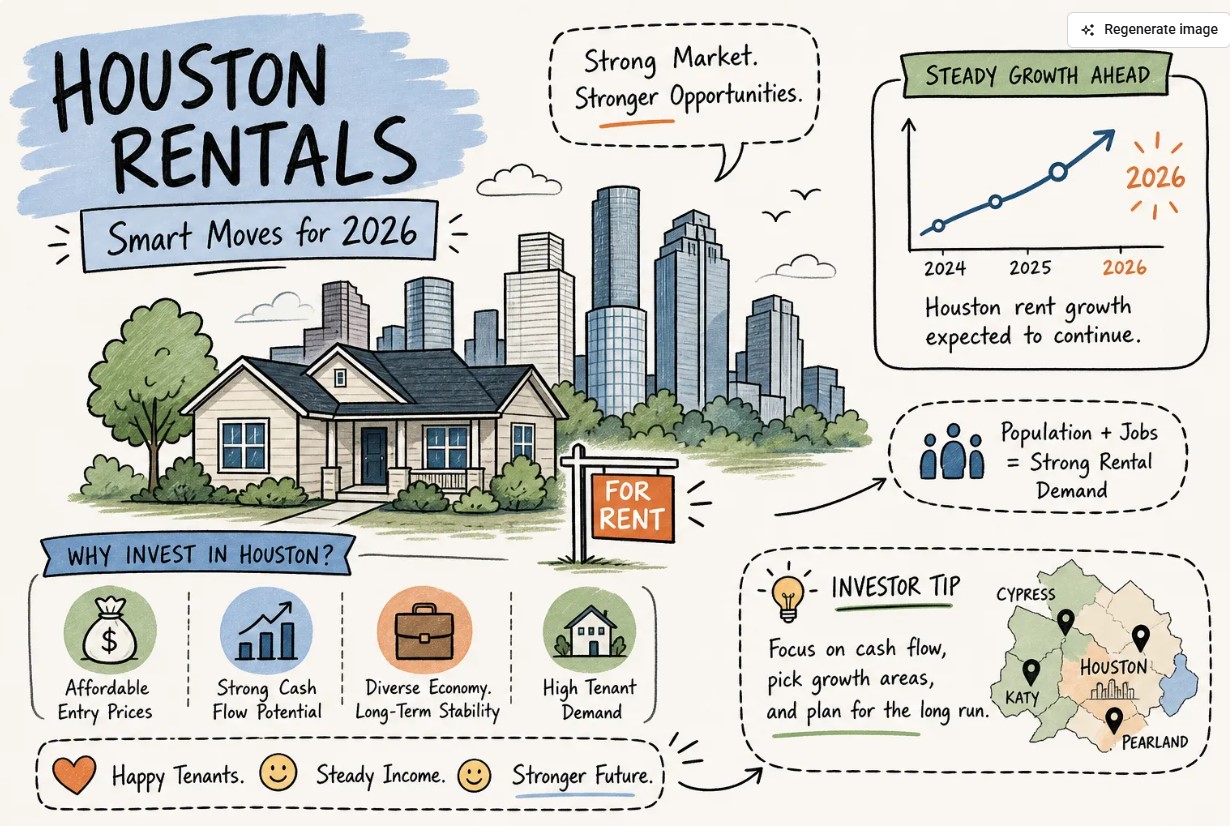
The broad overview of Houston's rental market reveals a compelling narrative. Median rents across various unit sizes in Houston currently stand at $1,109 to $1,371 for studios, approximately $1,199 for one-bedroom units, $1,405 to $1,440 for two-bedroom units, and around $1,940 for three-bedroom units, according to Rent.com and Apartments.com data. For investors, these figures represent a potential gross monthly income cap at the city level, before considering specific suburb factors, property conditions, and the competitive landscape of each micro-market.

The pivotal shift from 2024 to 2026 is more about trends than mere numbers. While Houston's inner-loop rents softened during 2024 and early 2025 due to an influx of new apartment deliveries, suburban single-family rental rates remained stable. As we progress into mid-2026, this trend has become more pronounced, presenting a market where suburban rents are either stable or increasing, with limited new supply in established single-family residence (SFR) subdivisions.

In terms of gross yield, suburban single-family rentals in Houston are generating an annual gross yield of approximately 6% to 8% at current price points, with net yields typically 2% to 4% lower after expenses. For instance, a $320,000 property renting at $2,200 per month yields a gross return slightly above 8%. This performance surpasses many coastal markets and stands strong against comparable suburban markets across the Sun Belt. Success hinges on acquiring the right property at the right price, where in-depth submarket knowledge becomes a significant competitive edge for investors.

Outstanding Performance in Atascocita, Cypress, and Conroe

In Atascocita, single-family rentals command monthly rents between $2,400 and $2,485 on average, with three-bedroom homes renting from $1,999 to $2,400 and four-bedroom units from $2,299 to $2,700, depending on condition and location. This area attracts predominantly family-oriented tenants, often relocating to the Lake Houston corridor for suburban space, quality schools, and community amenities without the long-term commitment of homeownership. These tenants tend to lease for extended periods, maintain properties well, and renew leases more frequently than urban renters.

Cypress remains a highly sought-after suburban rental location in Houston for 2026. Proximity to major employers in the energy sector along the Hwy 290 corridor and top-ranked schools in the Cy-Fair ISD sustain strong demand, successfully absorbing new rental inventory. Rental rates in Cypress are stable or slightly increasing compared to the previous year, driven by employment and educational fundamentals that also fuel owner-occupied demand. With 537 to 589 homes listed for rent as of late spring 2026, the market shows a healthy absorption rate given the community size and incoming demand. Investors buying in Cypress are essentially investing in a submarket with a robust renter base and long-term appreciation potential.

Conroe and the broader Montgomery County market present a compelling growth story for rental investors. Between 2024 and 2025, Montgomery County experienced a 4.2% growth rate, one of the highest in the Texas metro area. Conroe offers lower acquisition costs than Cypress, enhancing gross yield potential. This value gap, combined with Northern Houston expansion, affordability relative to inner suburbs, and ongoing commercial development, sustains strong rental demand.

Vacancy Trends and Implications for Houston Rental Property Owners

The Houston-The Woodlands-Sugar Land area's vacancy rate stands at approximately 10.5% as per HUD's Q1 2026 local market assessment, compared to the national rental vacancy rate of 7.3%. However, this metro figure blends two distinct markets. The influx of new multifamily supply has increased inner-loop apartment sector vacancies. In contrast, suburban SFR markets display tighter availability, with no published single-family vacancy rates for specific cities like Cypress or Conroe. Inventory counts and days-on-market trends provide valuable insights for investors.

In Atascocita, Cypress, and Conroe, well-priced single-family rentals are quickly absorbed. Local agents report that a correctly priced 3-bedroom, 2-bath home in a desirable subdivision leases within days. The target demographicdual-income families, relocation buyers, and corporate transfereesis active and qualifies swiftly.

Low vacancy rates have two strategic implications beyond merely filling units. First, they support rent growth at lease renewal, as tenants with limited alternatives are more inclined to accept modest annual increases rather than incur moving costs and search friction. Second, tightening suburban rental markets often correlate with rising owner-occupied home values in the same neighborhoods, offering long-term hold investors a dual advantage: rental income today and appreciation upon exit.

Driving Forces of Rental Demand in Houston's Suburbs

Houston continues to experience significant inbound migration from states like California and Illinois, a trend supported by IRS migration data and U.S. Census flows, with no signs of abating in 2026. Relocating households often prefer renting for 12 to 24 months to acclimate to a new market before purchasing. This pattern generates predictable, well-qualified demand for suburban single-family rentals in communities where Results Real Estate operates: established suburbs with top-tier schools, amenity-rich neighborhoods, and convenient commutes to major employment centers.

Houston's economic anchors are crucial for tenant stability. The energy sector, Texas Medical Center, Port of Houston logistics corridor, and a growing aerospace presence ensure a professional tenant base with stable, long-term employment. Tenants employed in these industries tend to renew leases at higher rates, maintain properties well, and present lower turnover risk. For investors pursuing a hold-and-rent strategy, this tenant quality translates to lower carrying costs and predictable cash flow.

Texas's structural tax environment enhances these advantages. The absence of a state income tax is a lasting competitive edge, not a temporary policy, continuing to attract individuals and corporations from higher-tax states. As long as Texas maintains this environment, migration flows supporting suburban Houston rental demand are likely to remain a structural asset. Investors entering this market are aligning with enduring fundamentals, not a cyclical anomaly.

Property Types Yielding Strong Rental Income

Single-Family Homes

3-bedroom, 2-bath homes priced between $280,000 and $350,000 are the most sought-after rental properties in all three featured suburbs. They align with the household size of the primary tenant demographic, rent swiftly, and offer easy exit potential as they appeal to owner-occupant buyers. This dual-market liquidity provides a significant risk management advantage, making this product type the dominant choice in Houston's suburban rental listings.

Small Multifamily

Duplexes and fourplexes offer a different return profile. Multiple income streams reduce vacancy risk at the asset level, and FHA financing options allow owner-occupied purchases with as little as 3.5% down on 2- to 4-unit properties. The trade-off is higher operational complexity and more active management. For first-time rental investors, suburban single-family homes typically offer a simpler path to a stable, tenanted asset. For investors scaling a portfolio, small multifamily properties can enhance cash flow efficiency once management infrastructure is established.

Townhomes and Condos

Townhomes and condos near employment corridors in Cypress or the broader Woodlands area can yield competitive returns, especially in the $200,000 to $280,000 acquisition range. The primary consideration is HOA fees. A $300 to $400 monthly HOA charge significantly impacts net yield on a property generating $1,800 in gross rent. Before purchasing a condo or townhome for income purposes, assess the full expense stack, not just the mortgage payment, and verify that the HOA permits non-owner-occupied rentals without restrictions.

How Results Real Estate Assists Investors in Acquiring Houston Rental Properties

Generic statewide rental data serves only as a starting point. The true advantage in Houston's suburban market lies in suburb-level and subdivision-level intelligence. This means knowing which streets lease quickly, which school zones attract long-term tenants, and which active listings offer genuine value against current rental comps. Results Real Estate provides investors with live MLS access and localized market reports, delivering precise insights across Atascocita, Cypress, Conroe, and surrounding communities our agents cover daily.

The difference between a good deal and a great one often hinges on knowing, for instance, that a subdivision in Atascocita leases a three-bedroom home in under two weeks, while a similar property two miles away takes longer. Our agents bring this hyper-local knowledge to every investor interaction, offering income projections based on current rental comps, neighborhood-level inventory context, and practical guidance on property specifications that attract the fastest-qualifying tenants. This knowledge gap between a generalist and a local specialist is significant and compounds over the life of an investment.

The next step is straightforward: contact a Results Real Estate agent for a free local market report tailored to your target suburb and investment criteria. You'll receive current comps, active listing alerts when qualifying properties come on the market, and a clear picture of the actual numbers in the specific submarket you're evaluating. This data is readily available, empowering investors to act faster and with more confidence than those relying solely on national trend reports.

The Bottom Line for Houston Rental Investors in 2026

In 2026, Houston rental properties offer a resilient income opportunity, particularly in the suburban areas of Atascocita, Cypress, and Conroe, where demand is structural and single-family homes in the $280,000 to $350,000 range deliver solid risk-adjusted returns. Population growth, economic stability, the absence of a state income tax, and stable suburban inventory levels all create favorable conditions for buy-and-hold investors who act on accurate, up-to-date data.

Investors succeeding in this market aren't relying on national headlines. They're collaborating with local agents who understand which subdivisions generate the strongest tenant demand and which listings offer real value against actual rental comps. This is precisely the type of ground-level support Results Real Estate provides to every investor client across Greater Houston.

Connect with the Results Real Estate team today to receive a current market report for your target suburb. Our agents specialize in income-producing acquisitions across Harris, Montgomery, and Liberty counties, ensuring you receive suburb-specific guidance, not generic advice. We'll help you identify genuine acquisition opportunities, supported by live MLS data and local expertise acquired from working these submarkets every day.

Just Listed

$395,000


4 Beds
2 Full Bath
1,869Bldg Sqft.
0 Lot Sqft.
Single-Family

Click here to view the listing
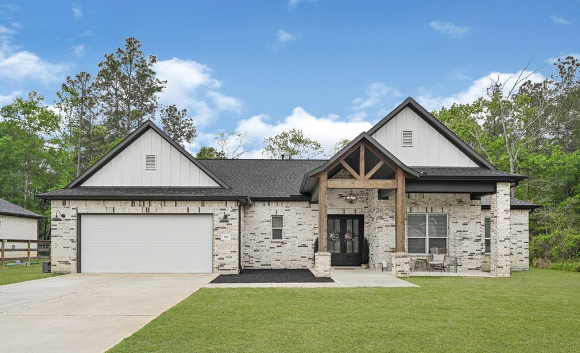
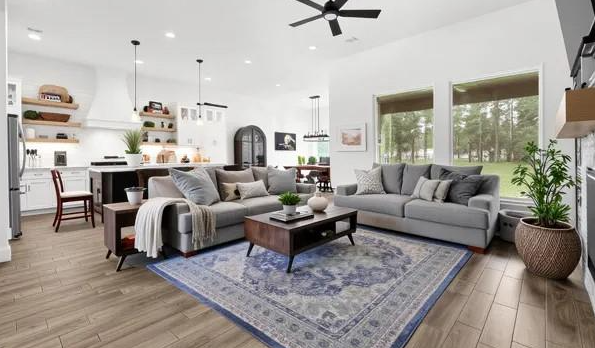
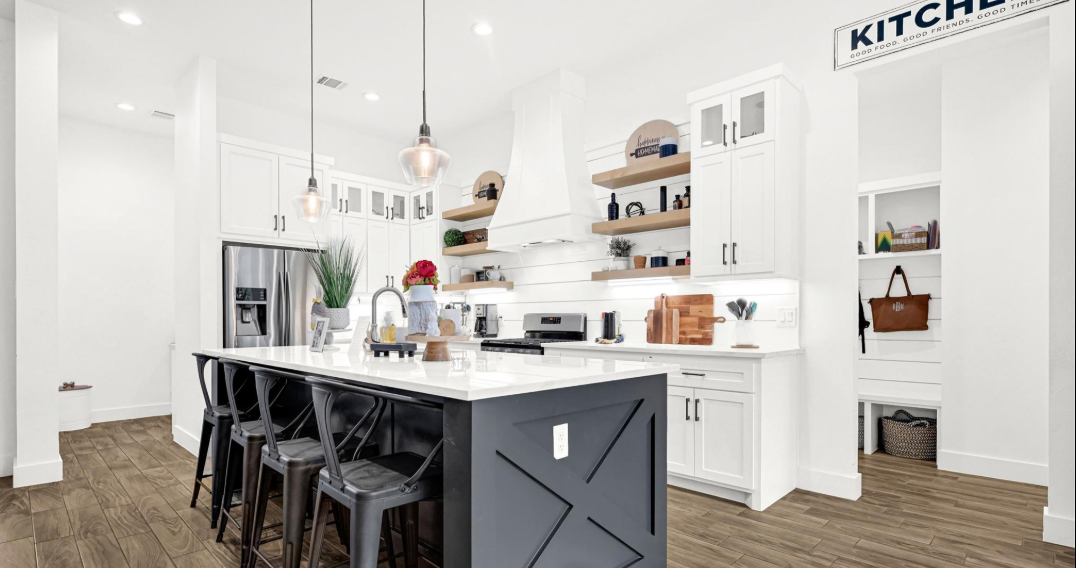
Move-in ready and packed with extras, this 4-bedroom, 2-bath home in Encino Estates sits on over of an acre, offering space, functionality, and flexibility. The well-designed floor plan provides comfortable living with generously sized bedrooms and inviting common areas perfect for everyday life or entertaining. A standout feature is the 30 x 30 workshop, ideal for storing boats, ATVs, tools, or creating the ultimate hobby space. Enjoy added peace of mind with a whole-house generator, ensuring comfort and reliability year-round. With plenty of room to spread out both inside and out, this property is perfect for those seeking space for work, play, and relaxationall in a desirable neighborhood setting. A rare opportunity with land, storage, and convenience already in place.

Just Listed

$2,200,000


3 Beds
2 Full Bath
1,680Bldg Sqft.
444,312 Lot Sqft.
Single-Family

Click here to view the listing
10.2-acre unristricted 2100 frontage property in Huffman, commercial opportunity. Has a 3-bedroom, 2-bath home with fenced in back yard. Provides comfortable living surrounded by cleared land with plenty of trees, ideal for those seeking privacy, a home-based business setup or build a business, or future investment. Zoned for commercial use, this property opens the door to a variety of opportunities including business operations, contractor headquarters, storage, or development potential. The impressive 30x40 workshop equipped with two large bay doors, providing ample space for equipment, vehicles, projects, or business use. With expansive acreage, excellent usability, and flexible zoning, this property is perfectly suited for entrepreneurs, investors, or buyers looking for room to grow. Property has 3 septic tanks and 2 wells.

Just Listed

$389,998


3 Beds
3 Full Bath
1 Half Bath
1,875Bldg Sqft.
1,425 Lot Sqft.
Single-Family

Click here to view the listing
Welcome to elevated city living in this beautiful three-story home located in a private gated community just minutes from the heart of Houston. Designed for both comfort and style, the home features a spacious open-concept living and kitchen area on the second floor, perfect for entertaining and everyday living. Step outside to enjoy your private balcony, an ideal spot for morning coffee or unwinding in the evening. Thoughtful design and functional layout make this home perfect for modern living with each bedroom offering its own ensuite bathroom, providing privacy and convenience. Ideally situated just minutes from Downtown Houston, the Texas Medical Center, the Houston Zoo, and the Museum District, youll enjoy quick access to some of the citys best destinations. Surrounded by an abundance of dining, entertainment, and cultural attractions, this home offers the perfect blend of urban accessibility and gated community privacy.

Ensuring successful real estate transactions requires skill, patience, and a strategic approach, especially when dealing with difficult or uncooperative buyers. Homebuyers can sometimes pose challenges that, if not handled correctly, can derail a deal or prolong the buying process.

However, real estate professionals can manage these situations with the right negotiating strategies and a clear understanding of the common issues. This blog provides an in-depth strategy to deal with difficult buyers, ensuring that the transaction proceeds smoothly and all parties are satisfied.

Key Takeaways

  • Pre-qualification and pre-approval help ensure homebuyers are serious and financially prepared, reducing potential issues.
  • Setting realistic expectations about market conditions and property prices helps prevent frustration for homebuyers.
  • Providing detailed information about the property builds trust and preempts potential issues for homebuyers.
  • Empathizing and validating buyers' concerns helps build rapport and trust, leading to smoother transactions.
  • A backup plan prepares for unforeseen challenges and keeps the transaction on track.

Pre-Qualification and Pre-Approval

Encouraging buyers to get pre-qualified or pre-approved for a mortgage before starting the home search can set the tone for a more cooperative and focused buying process. Pre-qualification offers a quick estimate of what buyers can afford, while pre-approval provides a more detailed financial analysis.

This step clarifies the buyer's budget early on, reducing the chances of issues later. For example, buyers might waste time looking at homes outside their budget without pre-approval. By requiring pre-qualification or pre-approval upfront, agents can ensure that buyers focus on properties within their means, making the process smoother for everyone involved.

Clear Communication

Clear communication is key to preventing misunderstandings and ensuring a smooth transaction. Homebuyers should know each process step, their expectations, and the timeline.

For example, if a buyer doesn't realize a home inspection is necessary, explaining its role early can avoid delays. Clarifying this step and how it fits into the process can keep the transaction on track. This approach is a practical negotiating strategy that helps ensure buyers feel informed and supported.

Set Realistic Expectations

Helping homebuyers set realistic expectations about market conditions, property prices, and availability can reduce potential friction later on. Ensure they know each process step, including the timeline and their responsibilities. For example, informing buyers early about the necessity of a home inspection can prevent delays. This straightforward approach keeps the transaction on track and is an effective negotiating strategy.

Address Concerns Promptly

When buyers raise concerns or objections, responding quickly and thoroughly can make all the difference in keeping the process moving smoothly; this helps keep negotiations on track. For instance, if a buyer worries about the plumbing, promptly arranging an inspection can ease their concerns. This approach shows you're responsive and committed to resolving issues, which is key in negotiating strategies. Addressing concerns immediately helps homebuyers feel more secure in their decision.

Provide Detailed Information

Equipping buyers with all the necessary information about the property can build trust and preemptively address potential issues. By offering clear data about the propertysuch as inspection reports, crime rates, and school ratingsyou help buyers make informed decisions. Transparency reduces misunderstandings and potential disputes during negotiations.

For example, if a buyer is unsure about the neighborhood, sharing relevant statistics and market trends can ease their concerns. This approach addresses their needs and strengthens your negotiating strategies.

Flexible Showings and Negotiations

Flexibility in showings and negotiations can go a long way toward accommodating buyers' needs and fostering cooperation. Sellers can make the process more convenient for buyers by offering non-standard viewing times and being open to negotiations outside typical hours.

This is one of the negotiating strategies to build trust and encourage a more cooperative atmosphere. This flexibility can be key in attracting and securing serious homebuyers in competitive markets.

Empathize and Validate

Empathizing with and validating homebuyers' concerns is among the effective negotiating strategies. Acknowledging their feelings can build rapport and keep the conversation positive. For example, if a buyer is worried about the high price of a home, you might say, I understand that the price might seem high. Then, you can share a comparative market analysis to explain the property's value.

Professional Guidance

Professional guidance based on market trends and property values can help homebuyers make informed decisions. For example, sharing recent sales data and trends can clarify the benefits of acting now if a buyer is unsure about making an offer due to market concerns.

This insight eases their worries and shows you as a reliable resource. Effective negotiating strategies can also support homebuyers by addressing their specific concerns.

Negotiate Fairly

Fair and transparent negotiations are crucial to maintaining buyer cooperation and trust. If buyers feel they are treated fairly, they are more likely to work with you. For example, if a buyer thinks the asking price is too high, don't dismiss their concerns.

Instead, offer a compromise, such as a lower price with a quicker closing date. This way, you address their concerns and find a solution for both parties. Using these negotiating strategies helps ensure a smooth process and keeps homebuyers engaged.

Have a Backup Plan

Always having a backup plan is essential when dealing with uncooperative homebuyers. This ensures the process doesn't stall if the initial plan faces obstacles. For instance, if a buyer refuses to agree on certain terms, you should have a list of alternative properties ready.

Presenting these options can help keep negotiations moving forward. This approach shows your readiness to find a solution and keeps the buyer engaged. Effective negotiating strategies like this help manage challenges and keep the process on track.

Document Everything

Thorough documentation of all buyer communications and agreements is vital, especially if disputes arise. First, keeping detailed records of all communications and agreements ensures you understand what was agreed upon.

For example, if a buyer later questions the sale terms, having records of emails, texts, and signed documents can help clarify any misunderstandings. This practice supports effective negotiating strategies by providing evidence of the agreed terms. Furthermore, thorough documentation promotes transparency and helps resolve issues.

Know When to Refer

In some cases, referring a persistently difficult buyer to another agent might be the best action for all parties involved. For instance, if a homebuyer consistently refuses your advice or is uncooperative, it might be time to pass them on to someone else.

This way, you can focus on easier clients while ensuring the challenging buyer still gets the help they need. Referring them to another agent with a different approach or more experience with tough clients can be beneficial.

Conclusion

While dealing with difficult homebuyers can be challenging, employing these negotiating strategies can help create a smoother, more successful home-buying experience for everyone involved. You can effectively manage and mitigate issues with difficult buyers by focusing on clear communication, setting realistic expectations, and being flexible and empathetic.

Remember, the key is maintaining professionalism, proactively addressing concerns, and knowing when to step back if needed. With these negotiating strategies in place, you can turn even the most challenging buyer into a satisfied homeowner.

FAQs

What should I do if outside opinions influence a homebuyer?

If outside opinions heavily influence a homebuyer, refocusing the conversation on their needs and preferences is important. Acknowledge the input they are receiving from friends or family, but gently steer them back to their priorities. This approach helps them decide based on their situation rather than external pressures.

What steps can I take if a homebuyer is unresponsive?

If a homebuyer becomes unresponsive, take proactive steps to re-engage them. Reach out through multiple channels, such as phone calls, emails, or text messages, and express your willingness to address any concerns they may have. Maintaining consistent and open communication can help bring them back into the process.

What if a homebuyer is unhappy with the inspection report?

If a homebuyer is unhappy with the inspection report, address their concerns by reviewing it and discussing possible solutions. Offer to arrange for additional inspections or repairs if needed. Providing reassurance and practical solutions can help alleviate their concerns and keep the transaction on track.

Individuals looking to settle down are often confused about renting or buying a house. Most people want to realize their American dream of owning a home. However, even when you can afford it, you should check the rent vs. buy calculator. The calculator accurately tells you which option would be cheaper based on your circumstances. Let's look at how the rent vs. buy calculator works and the steps to calculate the cost of renting vs. buying a home.

Key Takeaways

  • Rent vs. buy calculator helps determine the more cost-effective option based on individual circumstances.
  • It considers various factors, including property cost, duration of habitation, mortgage interest rate, and rental rates.
  • The breakeven point is crucial; if you plan to live beyond it, buying may be cheaper.
  • The 5% rule provides a quick way to estimate the breakeven point.
  • Renting may avoid maintenance costs while buying offers a return on investment.
  • Decide after considering long-term implications and using tools like the rent vs. buy calculator, and explore real estate options on HAR.

An Introduction to Rent vs. Buy Calculator

The rent vs. buy calculator is an innovative tool for determining the best financial course of action between renting and purchasing a residential property. For example, if you are willing to buy a home for a short period, you are not allowing yourself to enjoy the appreciation of the house's value. Hence, renting a house rather than buying one would be financially prudent.

The renting vs. buying calculator adds all the costs and return on investments to generate a graph and find a break-even point. It is essential to understand these results to choose between renting vs. buying. Nevertheless, the rent vs. buy calculator does not yield the most precise results because it is based on a few assumptions.

This is covered later in this blog, but first, let's see how to get started and use the rent vs. buy calculator.

Learn More: Calculate Your Monthly Mortgage

Steps to Using a Rent vs. Buy Calculator

Using a rent vs. buy calculator is easy, and one can approximate the comparative expenses between renting and buying a home by inputting the pertinent details into the calculator. We have listed three simple steps to using the calculator:

  • Make Sure You Have all the Information

Before using a rent vs. buy calculator, ensure you have some information. For most parts, this information might be at the top of your head if you have already begun a house search. This encompasses an array of considerations, such as the cost of the residential property under consideration, the projected tenure of residency, the prevailing mortgage interest rate, and the rental outlay in your vicinity.

The following list includes all the factors and, consequently, all the information you should have on your hands before using renting vs. buying calculators:

Buying
LocationLoan TermMaintenance Costs
Home PriceInterest RateProperty Taxes
Down PaymentClosing CostsHome Appreciation
Renting
Monthly RentSecurity DepositInsurance
Annual IncrementRent DepositUpfront/Additional Costs
  • Fill in the Information in Rent vs. Buy Calculator

Once you have all the necessary information, enter it into the rent vs. buy calculator. But be sure to enter accurate information to ensure accurate results. One may procure this valuable information from the vast expanse of real estate websites. You may also seek the expert counsel of an expert real estate agent.

Nevertheless, this step ensures that your specific situation is accounted for in the calculator. You can change the down payment, maintenance costs, and of course, the home price. Every box is editable, making the renting vs. buying calculator estimate a cost that is as precise as possible.

  • Carefully Review Results from Rent vs. Buy Calculator

After entering the information into the calculator, it will project the costs over a few years. Consequently, a graph will be generated that projects the cost of renting vs. buying a home. Further, If applicable, a breakeven point is highlighted on the graph.

The breakeven point is when the cost of renting vs. buying a home equals or closes in on the buying cost. Consider buying if you are going to live beyond the number of years it took to reach the breakeven point. For example, if the breakeven point is at 5 years, and you plan on living in your house for more, then buying will be cheaper.

Take some time to review the results and consider the factors involved.

Rent vs. Buy Calculator: How Does it Work?

You must wonder how the rent vs. buy calculator incorporates and is customized to your circumstance. To understand that, you must learn what happens at the tool's back end. Firstly, the calculator duly factors in many elements, including but not limited to the residential property's value, the anticipated duration of habitation, the applicable mortgage interest rate, and the prevailing rental rates in your region.

Some of these costs are one-time costs in the buying section of the calculator, for example, the upfront costs, agent costs, and closing fees, while others keep accumulating, much like the house appreciation or the monthly mortgage payments. In brief, to find out the cost of renting, the calculator factors in repeated costs, such as the rental payment, and the one-time cost, like a security deposit. Further, the Rent vs. Buy calculator also puts a specific percentage according to the current market rate to calculate the equity.

Nevertheless, if there are still any confusions, continue reading to see if frequently asked questions have covered them.

FAQs

What is the 5% rule in renting vs. buying a home?

The 5% rule is a quick method to calculate the breakeven point between renting and buying a home. To use it, multiply the home's cost by 5% and then divide by 12. The result represents the monthly cost at which renting is financially advantageous. If the monthly rent for a similar property is lower than this calculated amount, it may be better to rent. If the rent is higher, buying might be the more cost-effective option.

Which is costlier, renting or buying a home?

The costliness of renting versus buying depends on various factors, including upfront costs, ongoing expenses, and the duration of ownership or rental. It's not as straightforward as one being universally more expensive than the other. Assess your financial situation and use a rent vs. buy calculator or the 5% rule to determine which option is more cost-effective for your specific circumstances.

How to estimate rent from home value?

As a rule of thumb, you can estimate a home's rent as around 1.1% to 1.3% of its value. However, this is a rough estimate, and actual rent can vary based on factors like the neighborhood, property upgrades, and local market conditions. The 5% rule can help you assess whether a specific rental cost is financially reasonable based on a home's value.

When you're selling a home, one decision you'll face is whether to offer seller concessions. But what does that mean and is it the right move for your sale? Let's break it down using the National Association of REALTORS Seller Concessions Consumer Guide.

Key Takeaways

  • Seller concessions are costs a seller agrees to cover for the buyer, making a home more appealing and potentially speeding up the sale.
  • Concessions can include loan fees, inspections, HOA dues, taxes, or repairs, helping buyers with limited cash reserves.
  • Concessions are different from an offer of compensation to a buyer's agent and are advertised or negotiated separately.

What Are Seller Concessions?

A seller concession is when the seller agrees to pay certain costs normally covered by the buyer. These concessions can make your home more appealing, help buyers with limited cash reserves, and sometimes lead to a quicker or stronger offer.

Examples of Seller Concessions

Sellers have flexibility in what they can offer. Concessions might cover things like:

  • Title search fees
  • Loan origination charges
  • Inspection or appraisal costs
  • Homeowners association (HOA) dues
  • Real estate taxes
  • Home repairs or updates
  • Professional fees (such as agents or appraisers)

These contributions reduce a buyer's upfront expenses, making homeownership more accessible.

How Do They Work?

Seller concessions can be advertised upfront or negotiated once an offer is made. They are usually written as a specific dollar amount in the purchase agreement. Keep in mind that concessions usually aren't binding until they're part of a signed contract.

Concessions vs. Offers of Compensation

It's important not to confuse concessions with an offer of compensation.

  • Concessions: Cover costs tied to buying the home (fees, taxes, inspections, etc.).
  • Offer of compensation: When a seller or their agent agrees to pay a buyer's agent for successfully closing the deal.

They serve different purposes and are handled separately.

How Do Buyers Find Out?

You can let buyers know about concessions by:

  • Advertising them in your Multiple Listing Service (MLS) listing (if allowed)
  • Sharing through your REALTOR
  • Discussing them during negotiations

Your listing agent can add a banner to the property's listing page on HAR.com to indicate the seller is open to contributions without making a firm commitment.

Note: Some MLS platforms only allow you to show concessions as a simple yes or no, and it must be written as the total sum of all concessions offered and can't be conditioned on the use of, or payment to, a buyer's agent.

Are There Limits?

Yes. The amount of concessions you can offer depends on the buyer's loan terms and state law. However, any payment you make toward a buyer's broker fee is excluded from this limit and must be handled off-MLS.

Why Work With a REALTOR?

Navigating concessions can feel complicated, but a REALTOR can help you weigh your options and protect your interests. REALTORS follow a strict Code of Ethics, pledging to put your needs first while guiding you through every step.

Final Thoughts

Seller concessions aren't required, but in a competitive real estate market, they can be a smart strategy. Whether it's speeding up your sale or making your home more attractive to buyers, offering concessions may help you reach the closing table with confidence.

Looking to sell your home? Find a local real estate professional on HAR.com.

When home sellers finally conclude a real estate deal, they often experience a sense of relief. However, it's crucial not to overlook the post-closing considerations, as they are vital in ensuring a smooth transition from seller to buyer. Post-closing refers to the period after the deal has been finalized, where certain tasks and responsibilities need to be addressed by both parties involved. For sellers, this phase involves tying up loose ends and fulfilling any remaining obligations related to selling their property.

This article will outline essential post-closing considerations to help home sellers navigate this phase successfully.

Key Takeaways

  • Post-closing is a critical phase for home sellers, involving completing legal and financial obligations after the sale concludes.
  • Sellers must ensure a smooth transition by transferring possession of the property to the buyer as per the contract.
  • Practical considerations like forwarding mail, transferring utilities, and updating addresses are essential post-closing tasks for Sellers.

Home Sellers' Guide toPost-Closing Considerations

Selling your home is a significant milestone, but it's important to remember that the process doesn't end when the deal is closed. Sellers still need to address several vital tasks during the post-closing period.

1. Review Final Settlement Statement

Home sellers should carefully review the final settlement statement provided by the closing agent or escrow officer. This document outlines all the expenses and credits associated with the sale, including closing costs, prorated property taxes, and any outstanding mortgage balances. Reviewing the settlement statement ensures that all transactions are accurately reflected and any discrepancies can be addressed promptly.

2. Complete Property Handover

Sellers should coordinate the final walk-through with the buyer to ensure that the property is in the agreed-upon condition and that all items included in the sale are present and accounted for. This includes keys, garage door openers, remote controls, manuals, warranties, and any other items specified in the purchase agreement.

3. Secure Important Documents

After the sale is complete, sellers should securely store all relevant documents related to the transaction, including the closing documents, deed, and any warranties or manuals for appliances or systems in the home. These documents may be needed for future reference or in any disputes with the buyer. Keeping them organized and easily accessible can save time and hassle.

4. Coordinate with Professionals

Throughout the post-closing period, home sellers may need to coordinate with various professionals involved in the sale. These professionals include real estate agents, attorneys, title companies, and mortgage lenders. Effective communication with these professionals is necessary to ensure a smooth transition.

5. Complete Repairs and Clean-Up

Before vacating the property, sellers should ensure that any agreed-upon repairs or maintenance tasks have been completed. This includes addressing any issues identified during the home inspection and leaving the property clean and presentable. By fulfilling their obligations, sellers can avoid potential disputes with the buyer and leave a positive impression.

6. Forward Mail and Change Address

To avoid delays in receiving important mail, home sellers should submit a change of address form with the postal service to forward mail to their new address. This ensures they continue receiving essential documents, such as tax statements and legal notices, without interruption. It's also a good idea to update the address with banks, insurance providers, and other relevant parties.

7. Cancel Utilities and Services

Sellers should contact their utility providers, such as water, gas, electricity, and internet, to cancel or transfer services to the new owner's name. This ensures the new owner can set up their accounts without issues. Additionally, sellers should cancel any other services tied to the property, such as landscaping or security monitoring, to avoid unnecessary charges.

8. Plan for Moving

Once the post-closing tasks are complete, sellers can begin planning their move. This may involve hiring movers, packing belongings, and coordinating logistics. Planning can help reduce stress and ensure a smooth transition to their new home.

9. Obtain Proof of Sale

Sellers need to obtain proof of sale for their records. This could include copies of the closing statement, deed, and other relevant documents. This documentation can be helpful for future reference or legal purposes.

10. Celebrate the Milestone

Finally, take the time to celebrate your accomplishments. Selling a home is a significant achievement, and you deserve to recognize the hard work and effort you put into the process.

Conclusion

The post-closing phase is a critical period for home sellers, marking the completion of legal and financial obligations following the sale of their property. Sellers need to ensure a smooth transition by transferring possession of the property as agreed upon in the contract. Practical tasks such as reviewing the final settlement statement, coordinating the property handover, securing necessary documents, and completing repairs and clean-up are vital for a successful closing process. By addressing these considerations diligently, sellers can confidently navigate this phase and move forward with their next steps in life.

FAQs

How long does the post-closing process usually take for home sellers?

The post-closing process can vary depending on various factors, such as the complexity of the transaction and local regulations. However, in most cases, sellers can expect the closing process to take anywhere from a few days to a few weeks.

Can home sellers access funds immediately after post-closing?

Sellers typically have access to their funds after the post-closing period. However, the exact timing may vary depending on factors such as the terms of the sale agreement and the processing time of the involved parties, such as the closing agent or escrow officer.

What should sellers do if there are disputes with the buyer after post-closing?

Disputes with the buyer can arise even after the post-closing phase. In such cases, sellers should consult with their real estate agent or attorney to resolve the issues amicably. Mediation or legal action can be initiated to address any disagreements or breaches of the sales contract.

When home sellers finally conclude a real estate deal, they often experience a sense of relief. However, it's crucial not to overlook the post-closing considerations, as they are vital in ensuring a smooth transition from seller to buyer. Post-closing refers to the period after the deal has been finalized, where certain tasks and responsibilities need to be addressed by both parties involved. For sellers, this phase involves tying up loose ends and fulfilling any remaining obligations related to selling their property.

This article will outline essential post-closing considerations to help home sellers navigate this phase successfully.

Key Takeaways

  • Post-closing is a critical phase for home sellers, involving completing legal and financial obligations after the sale concludes.
  • Sellers must ensure a smooth transition by transferring possession of the property to the buyer as per the contract.
  • Practical considerations like forwarding mail, transferring utilities, and updating addresses are essential post-closing tasks for Sellers.

Home Sellers' Guide toPost-Closing Considerations

Selling your home is a significant milestone, but it's important to remember that the process doesn't end when the deal is closed. Sellers still need to address several vital tasks during the post-closing period.

1. Review Final Settlement Statement

Home sellers should carefully review the final settlement statement provided by the closing agent or escrow officer. This document outlines all the expenses and credits associated with the sale, including closing costs, prorated property taxes, and any outstanding mortgage balances. Reviewing the settlement statement ensures that all transactions are accurately reflected and any discrepancies can be addressed promptly.

2. Complete Property Handover

Sellers should coordinate the final walk-through with the buyer to ensure that the property is in the agreed-upon condition and that all items included in the sale are present and accounted for. This includes keys, garage door openers, remote controls, manuals, warranties, and any other items specified in the purchase agreement.

3. Secure Important Documents

After the sale is complete, sellers should securely store all relevant documents related to the transaction, including the closing documents, deed, and any warranties or manuals for appliances or systems in the home. These documents may be needed for future reference or in any disputes with the buyer. Keeping them organized and easily accessible can save time and hassle.

4. Coordinate with Professionals

Throughout the post-closing period, home sellers may need to coordinate with various professionals involved in the sale. These professionals include real estate agents, attorneys, title companies, and mortgage lenders. Effective communication with these professionals is necessary to ensure a smooth transition.

5. Complete Repairs and Clean-Up

Before vacating the property, sellers should ensure that any agreed-upon repairs or maintenance tasks have been completed. This includes addressing any issues identified during the home inspection and leaving the property clean and presentable. By fulfilling their obligations, sellers can avoid potential disputes with the buyer and leave a positive impression.

6. Forward Mail and Change Address

To avoid delays in receiving important mail, home sellers should submit a change of address form with the postal service to forward mail to their new address. This ensures they continue receiving essential documents, such as tax statements and legal notices, without interruption. It's also a good idea to update the address with banks, insurance providers, and other relevant parties.

7. Cancel Utilities and Services

Sellers should contact their utility providers, such as water, gas, electricity, and internet, to cancel or transfer services to the new owner's name. This ensures the new owner can set up their accounts without issues. Additionally, sellers should cancel any other services tied to the property, such as landscaping or security monitoring, to avoid unnecessary charges.

8. Plan for Moving

Once the post-closing tasks are complete, sellers can begin planning their move. This may involve hiring movers, packing belongings, and coordinating logistics. Planning can help reduce stress and ensure a smooth transition to their new home.

9. Obtain Proof of Sale

Sellers need to obtain proof of sale for their records. This could include copies of the closing statement, deed, and other relevant documents. This documentation can be helpful for future reference or legal purposes.

10. Celebrate the Milestone

Finally, take the time to celebrate your accomplishments. Selling a home is a significant achievement, and you deserve to recognize the hard work and effort you put into the process.

Conclusion

The post-closing phase is a critical period for home sellers, marking the completion of legal and financial obligations following the sale of their property. Sellers need to ensure a smooth transition by transferring possession of the property as agreed upon in the contract. Practical tasks such as reviewing the final settlement statement, coordinating the property handover, securing necessary documents, and completing repairs and clean-up are vital for a successful closing process. By addressing these considerations diligently, sellers can confidently navigate this phase and move forward with their next steps in life.

FAQs

How long does the post-closing process usually take for home sellers?

The post-closing process can vary depending on various factors, such as the complexity of the transaction and local regulations. However, in most cases, sellers can expect the closing process to take anywhere from a few days to a few weeks.

Can home sellers access funds immediately after post-closing?

Sellers typically have access to their funds after the post-closing period. However, the exact timing may vary depending on factors such as the terms of the sale agreement and the processing time of the involved parties, such as the closing agent or escrow officer.

What should sellers do if there are disputes with the buyer after post-closing?

Disputes with the buyer can arise even after the post-closing phase. In such cases, sellers should consult with their real estate agent or attorney to resolve the issues amicably. Mediation or legal action can be initiated to address any disagreements or breaches of the sales contract.

Open House Invitation

Date: July 27, 2025

Time: 11:00 AM - 1:00 PM

Listing Price: $449,999

Listing Video

Property Report

MLS 3248918

Property Details:

  • Bedrooms: 4
  • Bathrooms: 2 Full
  • Living Space: 2,669 sq. ft.
  • Lot Size: 30,013 sq. ft.

Discover this stunning home that welcomes you with an impressive foyer featuring soaring ceilings. The open floor plan is ideal for entertaining, highlighted by a gourmet kitchen equipped with a spacious island and a charming farmhouse sink. Enjoy the luxury of upper and lower cabinets, a striking mosaic backsplash, quartz countertops, and top-of-the-line stainless steel appliances. A beautifully crafted walk-in pantry is conveniently situated next to the kitchen.

The breakfast room offers the perfect setting with large windows that provide a picturesque view of the extended covered patio and expansive backyard. Similar windows in the elegant owner's suite offer sweeping views as well. The owner's retreat features a soaking tub, a separate walk-in shower, dual quartz vanities, and an expansive walk-in closet.

This property is ready for your dream pool and workshop, offering ample space for both. It's a truly exceptional home that you won't want to miss. Schedule your showing today to experience it firsthand!

Relocating to Houston: Why the Bayou City Should Be Your Next Home

If youre considering a move and seeking a vibrant city with a thriving economy, diverse culture, and a housing market that doesnt make you cry, let us introduce you to Houston, Texas. Often overshadowed by its flashier neighbors, Houston is quietly becoming one of the most appealing places to live in the United States. Lets dive into what makes the Bayou City a hidden gem for anyone ready to make a move.


Why Houston?

Houston is the fourth-largest city in the U.S., but dont let its size intimidate you. This sprawling metropolis has a way of making everyone feel at home. From its bustling downtown to its cozy suburban neighborhoods, Houston strikes a unique balance of big-city perks with a welcoming, community-oriented vibe.


1. Diverse and Affordable Housing Market

One of Houston's most attractive features is its housing market. Unlike cities like Austin, Los Angeles, or New York, Houstons real estate offers a rare combination of affordability and variety. Whether youre searching for a modern loft in the heart of downtown, a charming bungalow in the historic Heights district, or a spacious family home in the suburbs, Houston has it alland at prices that might make you do a double-take.

  • Median Home Price: Around $340,000 (well below the national average in 2024!).
  • Renting? Expect reasonable rates compared to other major cities, with one-bedroom apartments averaging around $1,300/month.

Houstons lack of zoning laws adds a layer of uniqueness to its neighborhoods. Youll find old-world charm next to ultramodern architecture, making for an eclectic and exciting housing experience.


2. Jobs Galore

Houston isnt just a great place to liveits a fantastic place to work. Dubbed the Energy Capital of the World, the city boasts a robust economy driven by industries like energy, aerospace, healthcare, and technology. With Fortune 500 companies calling Houston home and a thriving entrepreneurial scene, opportunities are endless.

Not to mention, the citys relatively low cost of living means youll get to keep more of your hard-earned money.


3. Cultural Richness

Think Houston is all cowboy boots and BBQ? Think again. The city is one of the most culturally diverse in the nation, with over 145 languages spoken. Its food scene reflects this incredible diversity, offering everything from world-class Tex-Mex to authentic Vietnamese pho.

And it doesnt stop with food. Houston is home to:

  • The Museum District with 19 museums (hello, free Thursday nights!).
  • The world-renowned Houston Livestock Show and Rodeo (part concert, part rodeo, part cultural extravaganza).
  • Theater District boasting Broadway-caliber performances.

4. Quality of Life

In Houston, you dont have to compromise on lifestyle. The city is lush with green spaces like Buffalo Bayou Park and Hermann Park, perfect for jogging, biking, or just enjoying the sunny Texas weather. Plus, Houston is a sports lovers paradise, home to the Astros, Rockets, and Texans.

Families will appreciate the top-rated school districts in suburbs like Sugar Land, Katy, and The Woodlands, while young professionals can enjoy the lively nightlife of Midtown and the eclectic art scene in Montrose.


5. Strategic Location

Houstons location gives you easy access to both coasts, Mexico, and Latin America. Whether youre a frequent flyer or a road-trip enthusiast, the citys centrality is a major perk.


Tips for Relocating to Houston

  1. Prepare for the Weather: Houstons summers are no jokethink humid and hotbut mild winters make up for it. Invest in good AC and enjoy the year-round patio weather!

  2. Get Ready to Drive: Houston is a car-centric city with sprawling highways. But the upside? Shorter commute times compared to other metros.

  3. Pick Your Neighborhood Wisely: With so many options, take time to explore areas like Heights, Rice Village, or Cypress to find the vibe that suits you best.


Why Wait? Houston Is Calling.

Houston isnt just a city; its a lifestyle. Its a place where opportunity meets affordability, where culture thrives, and where anyone can feel at home. Whether youre a first-time buyer, a family looking for more space, or a professional chasing the next big thing, Houston has something for everyone.

Ready to make the move? Pack your bags and start your next chapter in a city thats as big as your dreams. Welcome to Houston!

A vibrant illustration of Houston, Texas, showcasing its diverse cityscape. The image includes the iconic downtown skyline with its tall skyscrapers, the sprawling Buffalo Bayou Park with lush greenery and jogging paths, and a cozy suburban neighborhood with modern houses. The scene captures the cultural richness of the city, featuring food trucks offering diverse cuisines and people of various ethnicities enjoying the sunny weather. The backdrop shows a clear blue sky with a few fluffy clouds, emphasizing the city's warmth and charm.

Open House

Open House Date


March 03, 201901:00 PM - 04:00 PM

$ 299,000


4 Beds
3 Full Bath
1 Half Bath
3,490 Bldg Sqft.
8,764 Lot Sqft.
Single-Family

Beautiful Eagle Springs home with huge pool sized yard, new fence, and brand new back patio! New wood flooring and remodeled master bath with 2 HUGE closets! Large open floorplan and a kitchen that's perfect for entertaining. His and Hers closets. Second floor includes three bedrooms and game room. Secret Room upstairs and laundry shoots!Covered patio with no back neighbors. THREE CAR GARAGE! Kids can walk to Eagle Springs Elementary school without having to cross any streets. Community pool/clubhouse/fitness center, tennis courts. There is NO noise from the school at all! The home sits at the front of the school and has a gate to walk to the front entrance. Very convenient for little ones!!This home and neighborhood HAS IT ALL!

OPEN HOUSE

$ 429,999

5 Beds
3 Full Bath
1 Half Bath
3,298 Bldg Sqft.
11,557 Lot Sqft.
Single-Family

ABSOLUTELY STUNNING HOME! This home is immaculate and priced to sell quickly! Home has a gorgeous front porch and amazing entry way! Large formal dining room and office. Open concept from the kitchen into the family room! Large master bedroom and bathroom with huge walk in closet. the game room has been turned into a 5th bedroom and the wall can be removed if needed, or just have the game room with a door for less noise!! All of the secondary bedrooms are VERY large with great closets! Covered back patio, pool, and hot tub that is great for entertaining in the summer!

Just Listed

$ 459,000


3 Beds
3 Full Bath
1 Half Bath
2,694 Bldg Sqft.
1,641 Lot Sqft.
Townhouse/Condo - Townhouse

LOCATION,LOCATION,LOCATION! This home has IT ALL! Walk to Woodlands Town Center,Lake Woodlands and Market Street. This is the Village Builders Avalon plan with massive open Island Kitchen and living, private study, and cheap taxes. Stainless steel appliances that stay, granite counters and beautiful cabinetry. 1st floor may be used as media, game room or 4th bedroom with full bath and closet! Private 24 hour security. Great parks. ALL Furniture CAN STAY! New AC and water heater.

Just Listed

$ 315,000


4 Beds
3 Full Bath
1 Half Bath
3,490 Bldg Sqft.
8,764 Lot Sqft.
Single-Family

Beautiful Eagle Springs home with huge pool sized yard, new fence, and brand new back patio! New wood flooring and remodeled master bath with 2 HUGE closets! Large open floorplan and a kitchen that's perfect for entertaining. His and Hers closets. Second floor includes three bedrooms and game room. Covered patio with no back neighbors. THREE CAR GARAGE! Kids can walk to Eagle Springs Elementary school without having to cross any streets. Community pool/clubhouse/fitness center, tennis courts. This home and neighborhood HAS IT ALL!

Open House

Open House Date


January 21, 201803:00 PM - 05:00 PM

$ 262,000


4 Beds
2 Full Bath
1 Half Bath
2,818 Bldg Sqft.
6,563 Lot Sqft.
Single-Family

BRAND NEW! Never lived in! This gorgeous 4 bedroom 2.5 bath has a large game room and NO BACK NEIGHBORS! This home is zoned to AMAZING schools, is close to awesome shopping and Lake Houston, and has easy access to the beltway. This home has PLENTY of upgrades like the kitchen granite, pendant lights, and the fridge is included. Builder warranties still apply! Check out this home today!

Open House

Open House Date


January 21, 201801:00 PM - 04:00 PM

$ 279,000


3 Beds
2 Full Bath
1 Half Bath
2,878 Bldg Sqft.
9,106 Lot Sqft.
Single-Family

Gorgeous 1 story in a culdesac DID NOT FLOOD! Home has a brand new roof, whole house generator, no back neighbors, and a sundowner retractable awning. This home has a massive kitchen, high ceilings, oversized rooms with huge closets, and is zoned to amazing schools! Beautiful curb appeal and sprinkler system. Painted garage floor with epoxy. The list goes on and on! Make your appointment today!

Visit houselogic.com for more articles like this.

Copyright 2017 NATIONAL ASSOCIATION OF REALTORS

Visit houselogic.com for more articles like this.

Copyright 2017 NATIONAL ASSOCIATION OF REALTORS

To ensure that your donation goes to Houston victims, it is essential that you write your check to the Spirit of Texas Flood Relief.

By telephone

1-800-HELPNOW
713-313-1733

In person

Checks can also be dropped off at any Chase Bank location.

Donating items

Today

KTRK Channel 13-Caring Cradles: 3310 Bissonnet, 713-666-0713. Collecting baby care items. Items also can be dropped off at Kroger stores today.

Gulf Coast Regional Blood Center: Blood drive from noon to 9 p.m. at Pasadena Town Square Mall next to Dillards.

All week

Houston Salvation Army: Furniture and other supplies for flood victims can be dropped at any of the following Salvation Army locations:
2600 Aldine-Westfield, 713-694-5688
364 Ave. E, Conroe, 956-760-2440
2762 Cherrybrook Lane, Pasadena, 713-378-0020
4516 Irvington Blvd., Houston, 713-692-0522
2407 N. Main, Houston, 713-224-2875

Volunteers of America: 237 W. 19th, Houston, 713-864-3145. Accepting furniture and merchandise.

Furniture Bank: Accepting furniture. Call 713-842-9771 for pickup of furniture donations for flood victims.

Goodwill Industries: 5200 Jensen, 713-692-6221. Accepting clothing, furniture and other household items. Call 713-699-6344 for drop-off center locations. 10 a.m.-6 p.m., 7 days. No home pickups. Officials said the greatest need is for household cleaning supplies, baby products and nonperishable food. Also needed are a freezer truck, 2,000 pounds of ice and 40 cases of soft drinks per day, and boxes to distribute food to flood victims.

The Jewish Community Center: 5601 S. Braeswood, is accepting donations of canned food, bottled water, clothing and baby care items for flood victims.

Kirby Middle School: 9709 Mesa Drive, is accepting donations of canned food, bottled water, clothing and baby care items for flood victims.

Houston Food Bank: 3811 Eastex Freeway between Calvalcade and Jensen exits, 713-223-3700, 8 a.m. to 7 p.m. Needs volunteer groups from companies: call Carol Gooden at 713-547-8609. Immediate needs: Individual servings of nonperishable food items (nutrition bars, peanut butter, high energy snacks, crackers, cereal); water; diapers/wet wipes; baby food; baby formula; sun screen.

List of area food banks: United Way of the Texas Gulf Coasts list of food pantries in the area. Requires free Acrobat Reader.

Neighborhood Centers Inc.: Services are being provided at the Harbach-Ripley Community Center in southeast Houston and Kashmere Senior Service Center in northeast Houston. Needs food, cleaning supplies, toiletries and other essentials to neighborhoods heavily damaged. For assistance, call 713-273-3103. To make a donation to NCI, call 713-669-5222.

The Nation of Islam: Muhammad Mosque 45, 4443 Old Spanish Trail and 5509 Blythewood, 713-741-2747. Needs food, clothing, nonperishable food, office furniture, cleaning supplies, blankets, diapers, baby formula and toiletries.

Montgomery County Food Bank: 936-539-6686

The Houston Humane Society: 14700 Almeda Road, 713-433-6421. Needs donations to help feed homeless animals. Needs dry and canned puppy and kitten food or monetary donations. Checks can be sent to Houston Humane Society Food Assistance, P.O. Box 450528, Houston, Texas 77245-0528.

The Theater District Association: 713-223-4544. Administrative personnel of the Houston Symphony, Alley Theatre and Society for the Performing Arts relocated to temporary offices and are asking for a telephone system for an office of 25, about 20 computers, a 35,000-square-foot air-conditioned facility for storage and construction of theatrical set pieces and 12,000 square feet of air-conditioned office space.

Gallery Furniture: 6006 Interstate 45 North between Tidwell and Parker exits. Collecting all items.

Saturday

Chinese American Relief Effort: 10303 West Office Dr., Food Fair 10 a.m. to noon Saturday. Originally a collection drive for Benevidez Elementary students, but organizers now will donate half of food fair receipts and additional donations to Red Cross fund.

Donating time

Red Cross volunteer line: 713-526-8300

City of Houston/Lakewood Church Adopt-A-Family program: 713-491-1300.

United Way of the Texas Gulf Coast hot line: 713-957-HELP.

Donating blood

Gulf Coast Regional Blood Center: To hold blood drives to replace about 1,500 blood donations lost during the flood. Today: Noon to 9 p.m. at Pasadena Town Square Mall next to Dillards. Friday: Noon to 9 p.m. at Union Station at Enron Field.

Visit houselogic.com for more articles like this.

Copyright 2016 NATIONAL ASSOCIATION OF REALTORS


Read more: http://members.houselogic.com/download/web/#ixzz40krfAXLo
Follow us: @HouseLogic on Twitter HouseLogic on Facebook

Kingwood Farmers Market-Every Thursday!

When:Thursday, Mar. 10, 2016
Time:Every Thursday from 2 p.m. to 6 p.m.
Where:Kingwood Town Center Park
8 N. Main Street, Kingwood View Map

Event Information:

If you love fresh home grown fruits and vegetables, now is the time to visit the Farmers Market in Kingwood Town Center Park.

Come and visit the certified vendors to buy locally grown and produced fruit, vegetables and such delicacies as indian food, jellies and jams, artisan breads, olive oil, goat cheese, lavender, jerky, sugar-free desserts, orchids and many others.

You can now check their web site at: www.towncenterevents.com/farmersmarket or visit https://www.facebook.com/kingwoodfarmersmarket.

8 Tips for Finding Your New Home

By: G. M. Filisko

A solid game plan can help you narrow your homebuying search to find the best home for you. Are you looking to buy a house in Kingwood, Kingwood, Huffman, or Crosby?

House hunting is just like any other shopping expedition. If you identify exactly what you want and do some research, youll zoom in on the home you want at the best price. These eight tips will guide you through a smart homebuying process.

1. Know thyself.

Understand the type of home that suits your personality. Do you prefer a new or existing home? If youre leaning toward a fixer-upper, are you truly handy, or will you need to budget for contractors? Fixer-uppers still cost money to do! Take it from me!

2. Research before you look.

List the features you most want in a home and identify which are necessities and which are extras. Identify three to four neighborhoods youd like to live in based on commute time, schools, recreation, crime, and price. Then hop onto http://web.har.com/carlisimons to get a feel for the homes available in your price range in your favorite neighborhoods. Use the results to prioritize your wants and needs so you can add in and weed out properties from the inventory youd like to view. I can help you with drive times from Kingwood to downtown, or Atascocita/Humble to the south side of Houston.

3. Get your finances in order.

Generally, lenders say you can afford a home priced two to three times your gross income. Create a budget so you know how much youre comfortable spending each month on housing. Dont wait until youve found a home and made an offer to investigate financing.

Gather your financial records and meet with a lender to get a prequalification letter spelling out how much youre eligible to borrow. The lender wont necessarily consider the extra fees youll pay when you purchase or your plans to begin a family or purchase a new car, so shop in a price range youre comfortable with. Also, presenting an offer contingent on financing will make your bid less attractive to sellers.

4. Set a moving timeline.

Do you have blemishes on your credit that will take time to clear up? If you already own, have you sold your current home? If not, youll need to factor in the time needed to sell. If you rent, when is your lease up? Do you expect interest rates to jump anytime soon? All these factors will affect your buying, closing, and moving timelines.

5. Think long term.

Your future plans may dictate the type of home youll buy. Are you looking for a starter house with plans to move up in a few years, or do you hope to stay in the home for five to 10 years? With a starter, you may need to adjust your expectations. If you plan to nest, be sure your priority list helps you identify a home youll still love years from now.

6. Work with a REALTOR, Like me!

I have expertise in all of the neighborhoods in Northeast Houston,and type of homes youre interested in. Because homebuying triggers many emotions, consider whether an agents style meshes with your personality.

I work with a TON of first time and veteran buyers. I work 24/7 for my clients and make sure you are extremely happy with your new home. MY SERVICES ARE FREE FOR YOU! The seller pays buyers agents, so I can do all of the legwork for you!

7. Be realistic.

Its OK to be picky about the home and neighborhood you want, but dont be close-minded, unrealistic, or blinded by minor imperfections. If you insist on living in a cul-de-sac, you may miss out on great homes on streets that are just as quiet and secluded.

On the flip side, dont be so swayed by a wow feature that you forget about other issues -- like noise levels -- that can have a big impact on your quality of life. Use your priority list to evaluate each property, remembering theres no such thing as the perfect home.

8. Limit the opinions you solicit.

Its natural to seek reassurance when making a big financial decision. But you know that saying about too many cooks in the kitchen. If you need a second opinion, select one or two people. But remain true to your list of wants and needs so the final decision is based on criteria youve identified as important.


Remember; if you are looking for a new home in Eagle Springs, The Bridges, The Groves of Atascocita, or any neighborhoods in Humble, Atascocita, or Kingwood TX. Give me a call today! I am an area expert and can help you find your dream home!

Carli Simons-Realtor 832-889-9769

Visit houselogic.com for more articles like this.

Copyright 2016 NATIONAL ASSOCIATION OF REALTORS


Read more: http://members.houselogic.com/download/web/#ixzz40CqHyToD
Follow us: @HouseLogic on Twitter HouseLogic on Facebook

Visit houselogic.com for more articles like this.

Copyright 2015 NATIONAL ASSOCIATION OF REALTORS


Read more: http://members.houselogic.com/download/web/#ixzz3vRxm8RaE
Follow us: @HouseLogic on Twitter HouseLogic on Facebook


Visit houselogic.com for more articles like this.

Copyright 2015 NATIONAL ASSOCIATION OF REALTORS

Read more: http://members.houselogic.com/download/web/#ixzz3qZ2sIOGS Follow us: @HouseLogic on Twitter HouseLogic on Facebook

Visit houselogic.com for more articles like this.

Copyright 2015 NATIONAL ASSOCIATION OF REALTORS

Read more: http://members.houselogic.com/download/web/#ixzz3qYmU7uUF Follow us: @HouseLogic on Twitter HouseLogic on Facebook

Visit houselogic.com for more articles like this.

Copyright 2015 NATIONAL ASSOCIATION OF REALTORS

Read more: http://members.houselogic.com/download/web/#ixzz3qYn6apLk Follow us: @HouseLogic on Twitter HouseLogic on Facebook